

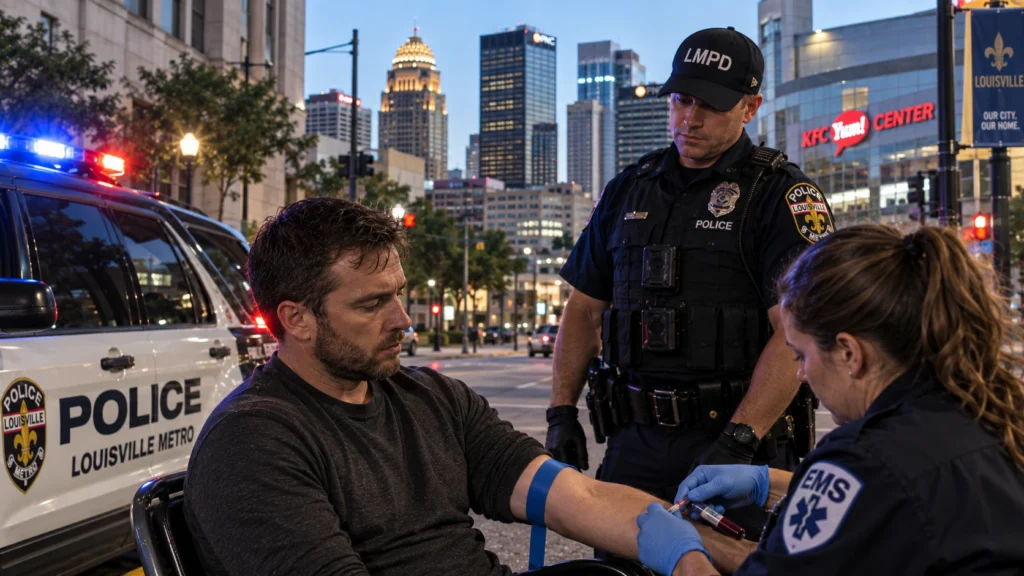
Can You Refuse a DUI Blood Test in Kentucky?: The Short Answer
Yes, you can refuse a blood test in Kentucky, and the rules for refusing a blood test are different from the rules for a breath test. Because a blood draw is more intrusive, the Fourth Amendment usually requires police to get a search warrant before they can take your blood. Kentucky's Supreme Court, in Commonwealth v. McCarthy, held that refusing a warrantless blood test cannot be used to double your jail time and cannot be used as evidence of your guilt at trial. Your license can still be suspended for refusing, though. And if the officer gets a warrant, you can no longer refuse. This is a technical, fast-moving area, which is exactly why you want a lawyer involved right away.
Blood tests raise different questions than the breath test most people picture in a DUI. The rules around refusing one have changed in recent years, and Kentucky is actually ahead of many states here. I am Matt Farra, and I defend DUI cases in Louisville and across Jefferson County. Here is what refusing a blood test really means under current Kentucky law.
Implied Consent Covers Blood, Too
Kentucky’s implied consent law, KRS 189A.103, says that by driving you are treated as having agreed to a test of your breath, blood, or urine once you are lawfully arrested for DUI. Blood is often the test of choice when police suspect drugs rather than alcohol, when there has been a serious accident, or when a breath sample is not available. So the blood-test question comes up more than people expect.
Breath and Blood Are Not Treated the Same
Here is the key point most people do not know. After a 2016 U.S. Supreme Court decision, Birchfield v. North Dakota, breath tests and blood tests are treated very differently under the Fourth Amendment. A breath test can be required as part of a lawful arrest without a warrant. A blood draw is more invasive, so police generally cannot take your blood without a search warrant, your valid consent, or a genuine emergency. That difference drives everything about refusing a blood test in Kentucky.
What Kentucky's McCarthy Decision Means for You
In 2021, the Kentucky Supreme Court applied Birchfield to Kentucky’s DUI law in a case called Commonwealth v. McCarthy. The court held two things that matter a great deal if you refused a blood test.
Your refusal cannot be used to increase your sentence. Kentucky normally doubles the mandatory minimum jail time when someone refuses testing. The court held that this enhanced penalty cannot be applied to someone who refused a warrantless blood test.
Your refusal cannot be used as evidence of your guilt. The court held that the Commonwealth cannot tell the jury you refused the blood test as a way of suggesting you must have been guilty.
Those are meaningful protections, and they are stronger than what many other states provide.
But Your License Is Still on the Line
There is an important exception. Even under McCarthy, the court can still suspend your driver’s license at arraignment because you refused. License suspension is treated as a civil consequence rather than a criminal punishment, and that consequence survives. So refusing a blood test is not free, even with the protections above.
What Actually Happens When You Refuse
In the real world, refusing does not usually end the matter. If you refuse, the officer can apply for a search warrant to draw your blood, and Kentucky judges are available to issue those warrants quickly, sometimes within minutes. Once there is a warrant, you can no longer refuse, and your blood can be drawn, by force if necessary. What refusing can do is keep the government from getting a warrantless sample and from using your refusal against you in the ways McCarthy blocks. Whether that helps you depends entirely on the facts.
You Have a Right to Call a Lawyer First
Before you decide on any test, KRS 189A.105 requires the officer to give you no less than 10 and no more than 15 minutes to try to reach an attorney. Given how technical the blood-test rules are, this is a right worth using. If you can reach a lawyer in that window, use it.
This Is Not a Do-It-Yourself Decision
The law here has shifted with recent court decisions and legislative changes, and it turns on details like whether a warrant existed and whether the test was breath or blood. That is a lot to weigh in a few minutes at the side of the road or at a hospital. The safest move is not to guess. Get a lawyer involved as early as you can, and let the specific facts of your stop drive the strategy.
Facing a DUI in Louisville?
If your case involves a blood test or a refusal, the details matter enormously, and the law is more favorable in Kentucky than many people realize. I handle these cases personally, and the first conversation costs nothing. Learn more about my Kentucky DUI defense work or call or text me directly at (502) 314-4499.
Frequently Asked Questions
Can I refuse a blood test in a Kentucky DUI?: Yes, you can refuse, but there are consequences, and they differ from a breath test. Because a blood draw usually requires a warrant, refusing a warrantless blood test cannot be used to increase your sentence or as evidence of guilt under Commonwealth v. McCarthy, though your license can still be suspended.
Is refusing a blood test the same as refusing a breath test?: No. A warrantless breath test is allowed, so refusing a breath test carries heavier consequences, including a possible doubled jail minimum and use of the refusal as evidence. A blood draw generally needs a warrant, which is why Kentucky courts treat a blood-test refusal differently.
Will the police just get a warrant for my blood?: Often, yes. If you refuse, the officer can seek a search warrant, and Kentucky judges can issue them quickly. Once a warrant is in place, you cannot refuse, and your blood can be drawn.
Can my refusal be used against me in court?: For a warrantless blood test, no. Under Commonwealth v. McCarthy, the Commonwealth cannot use your refusal of a warrantless blood test as evidence of guilt or to enhance your penalty. The rules are different for breath tests.
Will I lose my license for refusing?: You can. Even where the criminal consequences of a blood-test refusal do not apply, the court can still suspend your driver’s license at arraignment as a civil consequence of refusing.
Disclaimer: This article is general legal information about Kentucky law, not legal advice, and reading it does not create an attorney-client relationship. For advice about your specific situation, speak with a licensed Kentucky attorney.

About Matt Farra
Louisville Criminal Defense Attorney • Founder, Farra Law Firm
Matt Farra has been licensed in Kentucky for nearly 20 years, defending clients across Louisville, Jefferson County, and Kentucky in state, district, and federal courts. A native Louisvillian with deep ties to the local legal community, he handles the full range of criminal matters, from DUI and drug offenses to white collar crimes, felony cases, and expungements. Every client at Farra Law Firm works directly with Matt from initial consultation through case resolution.
“I believe every person, no matter their background or the charge against them, deserves a strong, respectful, and aggressive defense.”
— Matt Farra
Credentials & Practice
- Kentucky Bar Association
- J.D., Northern Kentucky University, Salmon P. Chase College of Law
- Nearly 20 years of Kentucky criminal defense experience
- Native Louisvillian with strong local court relationships
- Practices in Louisville Metro Criminal Court, Jefferson County District & Circuit Court, and Kentucky county courts statewide
- Admitted to U.S. District Court, Western District of Kentucky (federal practice)
- Justia Lawyer Profile
- Avvo Attorney Profile
Reviewed for legal accuracy by Matthew J. Farra, Founding Attorney, Farra Law Firm. Last reviewed: April 2026.