

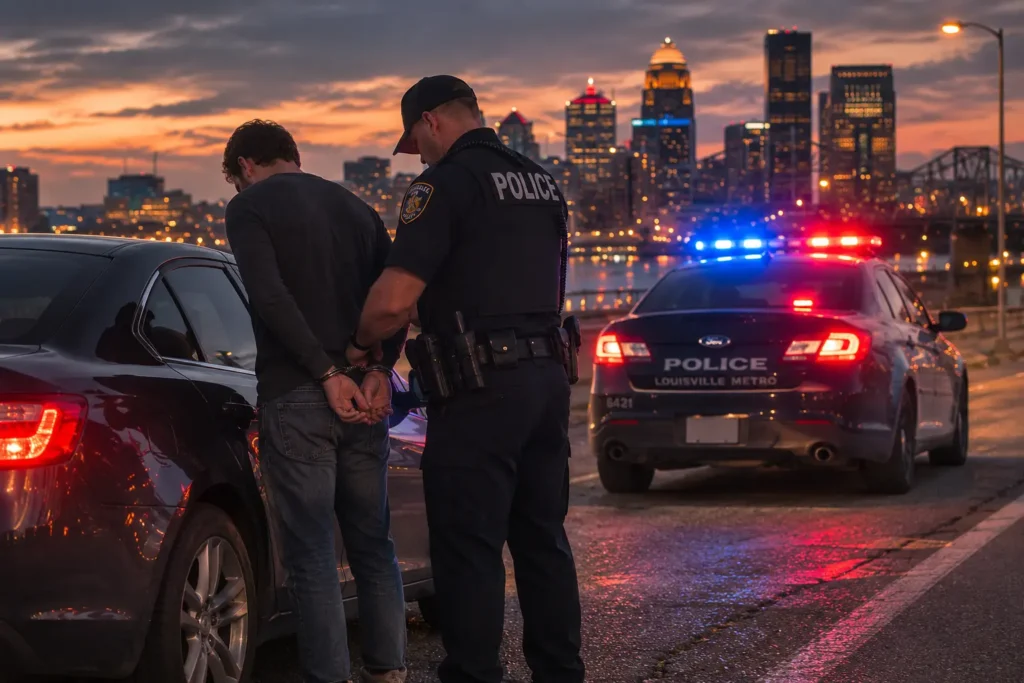
TL;DR: If you have been arrested for a DUI in Kentucky, what you do in the next few hours matters. You have the right to stay quiet and the right to talk to a lawyer. Roadside field sobriety tests and the handheld roadside breath test are voluntary. The official breath or blood test after arrest is different: under Kentucky's implied consent law you are treated as having agreed to it, and refusing carries real consequences, including a license suspension that runs until your case is over and double the mandatory minimum jail time if you are later convicted. Before you decide on that test, Kentucky law gives you 10 to 15 minutes to try to reach an attorney. Use it.
Getting arrested for a DUI is frightening, and the system moves fast. I am Matt Farra, and I defend DUI cases in Louisville and across Jefferson County. Here is a clear walk-through of what actually happens after a Kentucky DUI arrest and the early decisions that can shape the whole case.
Stay Calm and Say Less
You are required to give the officer your license, registration, and insurance. You are not required to explain where you were, where you are going, or how much you had to drink. The polite, simple answer is that you would prefer not to answer questions. People rarely talk their way out of a DUI arrest, and most of what gets said at the roadside ends up in the police report as evidence. Staying calm and saying little is not being difficult. It is protecting yourself.
Roadside Tests Are Not the Station Test
There are two very different kinds of testing in a Kentucky DUI, and people constantly confuse them. The roadside field sobriety tests, like the walk-and-turn and the one-leg stand, and the small handheld breath device an officer may offer at the scene are voluntary. You can politely decline them, and declining them does not trigger Kentucky's implied consent penalties. Implied consent applies to the official breath or blood test given after you are arrested, not to the roadside tests.
The Test After Arrest and Your Right to Call a Lawyer
Under Kentucky's implied consent law, KRS 189A.103, driving in Kentucky means you are treated as having consented to a breath, blood, or urine test once an officer has grounds to arrest you for DUI. Before you decide whether to take that test, KRS 189A.105 requires the officer to read you your rights and to give you no less than 10 and no more than 15 minutes to try to contact an attorney. If you cannot reach one in that window, the choice is still yours. This is one of the most useful rights you have in the entire process, so ask to use your phone and try to call counsel before you decide.
What Refusing the Test Really Does
Refusing is not a free pass, and it is not a decision to make lightly. Under KRS 189A.105 and 189A.107, refusing the official test means the refusal can be used against you in court as evidence, your license is generally suspended at arraignment and stays suspended until the case is resolved, your mandatory minimum jail time doubles if you are later convicted, you cannot plead the charge down to a lesser offense, and you become ineligible for a hardship license. Refusing makes sense in some situations and not in others. That is exactly why the 10-to-15-minute call to a lawyer matters so much.
Booking, Detention, and Release
After the arrest you are taken to Louisville Metro Corrections for booking. Kentucky law, KRS 189A.110, requires a minimum detention period before you can be released. One thing that surprises people who have dealt with other states: Kentucky has no commercial bail bondsmen. The Commonwealth abolished them decades ago under KRS 431.510, so release runs through the court's Pretrial Services, not a private bondsman.
Your First Court Date
Your DUI is handled in Jefferson District Court. At arraignment you enter a plea and the court addresses your driver's license. If you refused testing, if you are a repeat offender, or if the incident involved an accident causing serious injury or death, the court can impose a pretrial license suspension under KRS 189A.200 that lasts while the case is pending.
The License Clock and Driving Again
A suspension does not always mean you cannot drive at all. Many DUI offenders can apply for an ignition interlock license under KRS 189A.340 and drive a vehicle fitted with the device. Note the catch tied to the testing decision: if you refused the test, you are barred from a hardship license. It is one more reason the choice at the station is so important.
What to Do in the First Few Days
Write down everything you remember while it is fresh: the reason given for the stop, what was said, and the timing of each step. Do not discuss the case with anyone but your lawyer, and do not post about it online. Watch your deadlines, because the license paperwork and the ignition interlock process are time-sensitive. And talk to a defense lawyer early. The sooner the stop, the testing, and the paperwork are reviewed, the more options tend to be on the table.
You Do Not Have to Face This Alone
The first days after a DUI arrest are when the most can be done. I handle these cases personally, and the first conversation costs you nothing. You can learn more about my approach to DUI defense in Louisville at https://farralaw.com/dui-drunk-driving-defense/, or call or text me directly at (502) 314-4499.
Frequently asked questions
Should I refuse the breath test in Kentucky?: There is no one-size-fits-all answer. Refusing keeps that specific test result out of evidence, but it suspends your license until the case ends, doubles the mandatory minimum jail time if you are convicted, blocks a plea to a lesser charge, and bars a hardship license. That is why Kentucky gives you 10 to 15 minutes to call an attorney before you decide.
Do I have to do field sobriety tests if a Kentucky officer asks?: No. Roadside field sobriety tests and the handheld portable breath test are voluntary. You can politely decline them. Implied consent applies to the official breath or blood test after arrest, not the roadside tests.
Can I get my license back while my DUI case is pending?: Often, yes, through an ignition interlock license under KRS 189A.340, which lets you drive a vehicle equipped with the device. If you refused testing, though, you are not eligible for a hardship license.
Do I need a bail bondsman after a DUI arrest in Louisville?: No. Kentucky does not have commercial bail bondsmen. Release decisions go through the court’s Pretrial Services after booking at Louisville Metro Corrections.
How soon should I talk to a lawyer?: As soon as possible. Testing decisions, license deadlines, and the early evidence all benefit from quick attention, and the first conversation with my office costs nothing.

About Matt Farra
Louisville Criminal Defense Attorney • Founder, Farra Law Firm
Matt Farra has been licensed in Kentucky for nearly 20 years, defending clients across Louisville, Jefferson County, and Kentucky in state, district, and federal courts. A native Louisvillian with deep ties to the local legal community, he handles the full range of criminal matters, from DUI and drug offenses to white collar crimes, felony cases, and expungements. Every client at Farra Law Firm works directly with Matt from initial consultation through case resolution.
“I believe every person, no matter their background or the charge against them, deserves a strong, respectful, and aggressive defense.”
— Matt Farra
Credentials & Practice
- Kentucky Bar Association
- J.D., Northern Kentucky University, Salmon P. Chase College of Law
- Nearly 20 years of Kentucky criminal defense experience
- Native Louisvillian with strong local court relationships
- Practices in Louisville Metro Criminal Court, Jefferson County District & Circuit Court, and Kentucky county courts statewide
- Admitted to U.S. District Court, Western District of Kentucky (federal practice)
- Justia Lawyer Profile
- Avvo Attorney Profile
Reviewed for legal accuracy by Matthew J. Farra, Founding Attorney, Farra Law Firm. Last reviewed: April 2026.
This article is general legal information about Kentucky law, not legal advice, and reading it does not create an attorney-client relationship. For advice about your specific situation, speak with a licensed Kentucky attorney.