

The Short Answer
A Kentucky DUI usually turns on a breath test, but there are actually two very different ones. The small handheld device at the roadside, the PBT, is voluntary and cannot be used as evidence of intoxication in court. The real evidential test is the Intoxilyzer at the station, and it only counts if the police follow strict rules: a 20-minute observation period, a certified operator, a properly maintained machine, and a test taken within two hours of driving. If you take that test, you also have the right to get your own independent blood test. When the procedure is not followed, the result can be challenged and sometimes thrown out.
The number on a breath test can feel like the whole case. It is not. In Kentucky, that number is only as good as the procedure behind it, and the procedure is governed by detailed rules. I am Matt Farra, and I defend DUI cases in Louisville and across Jefferson County. Here is how breath testing actually works under Kentucky law and where these cases can be challenged.
Two Different Breath Tests
People often do not realize they may be asked to blow twice, into two different machines, and the two could not be more different in the eyes of the law.
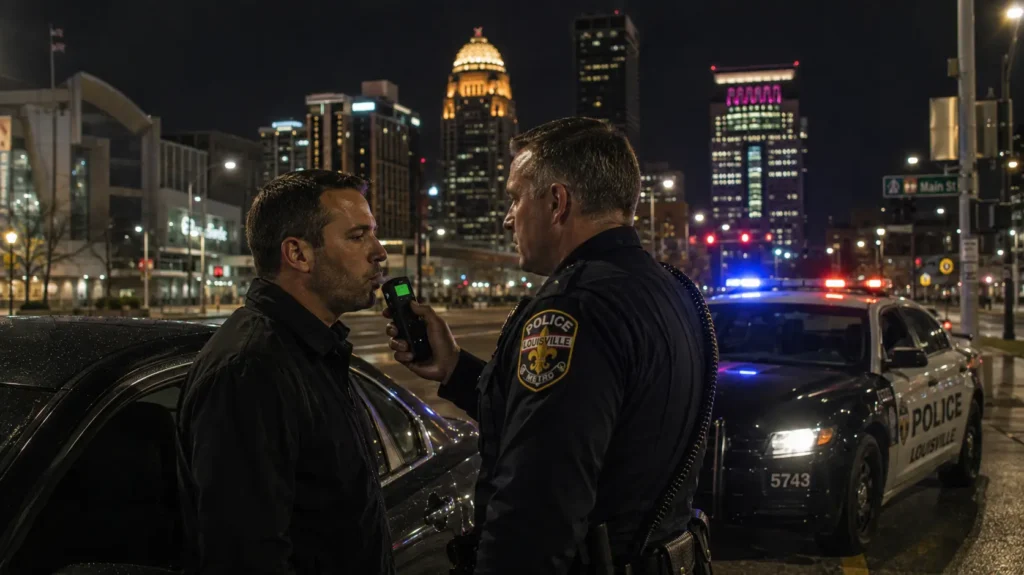
- The roadside test (PBT). The small handheld device an officer may offer at the scene is a preliminary breath test under KRS 189A.100. It is voluntary. You can decline it, and refusing it carries no penalty. More importantly, its result is not admissible as evidence of intoxication in court under KRS 189A.104. Its only real job is to help an officer decide whether there is probable cause to arrest.
- The station test (Intoxilyzer). The test that matters for evidence is the one on the Intoxilyzer instrument at the station or jail, after arrest. This is the test covered by Kentucky’s implied consent law, and it comes with real consequences if you refuse.
Implied Consent and the Station Test
Under KRS 189A.103, by driving in Kentucky you are treated as having consented to a breath, blood, or urine test once you are lawfully arrested for DUI. This is the evidential test, not the roadside PBT. Refusing it carries the consequences I have written about elsewhere, including your license being suspended until the case resolves and the refusal being used against you. Before you decide, Kentucky law gives you 10 to 15 minutes to try to reach an attorney under KRS 189A.105.
The 20-Minute Observation Rule
Here is one of the most important and most overlooked rules. Before a breath test can count, a certified operator must keep you under continuous personal observation for at least 20 minutes at the test location. This comes from Kentucky regulation 500 KAR 8:030 and is built into KRS 189A.103. During those 20 minutes you cannot eat, drink, smoke, or put anything in your mouth or nose. It also means no belching, burping, or vomiting, because bringing anything up from your stomach can throw off the reading. Kentucky courts have recognized that a belch or burp during the observation period can require the operator to start the full 20 minutes over again. When officers rush this step or look away, it becomes a real issue in the case.
The Two-Hour Window
Kentucky law also expects the evidential test to be taken within two hours of when you stopped driving, under KRS 189A.010. A breath reading collected well outside that window invites a serious challenge, because alcohol levels change over time and a delayed number may not reflect what your level actually was behind the wheel.
What Makes a Breath Test Admissible
The Commonwealth does not just get to read a number to the jury. Under Kentucky’s leading case on this, Commonwealth v. Roberts, the prosecution has to establish several things before an Intoxilyzer result comes in:
- The machine was checked and in proper working order at the time of the test.
- The test followed the steps and sequence set out in 500 KAR 8:030.
- A certified operator kept you under continuous observation for at least 20 minutes beforehand.
- The operator was properly trained and certified on the machine.
- The test was administered according to standard operating procedures.
Every one of those is something that can be examined and, when it was not done right, challenged. Maintenance and calibration records, operator certification, and the observation period are all fair game.
Your Right to an Independent Test
This one is underused. Under KRS 189A.105 and 189A.103, if you submit to every test the officer requests, you then have the right to get your own independent blood test, done by a person of your choosing, at your own expense, within a reasonable time of the arrest. The officer is supposed to inform you of this right again right after the last test and to make reasonable efforts to help you get to the independent test. An independent result can become important evidence, and a failure to honor this right can matter in the case.
Where These Cases Get Challenged
Put together, the breath test is far less airtight than that single number suggests. Was the stop lawful in the first place? Was the 20-minute observation actually continuous? Were the machine's records in order? Was the operator certified? Was the test within the two-hour window? Was your right to an independent test respected? There are no guarantees, and every case turns on its own facts, but the breath result is often the most challengeable piece of a DUI, not the least.
Facing a DUI in Louisville?
If your case involves a breath test, the number on the ticket is only the starting point. The sooner the stop, the machine records, and the testing procedure are reviewed, the more can be done. I handle these cases personally, and the first conversation costs nothing. You can learn more about my approach to DUI defense in Louisville at https://farralaw.com/dui-drunk-driving-defense/, or call or text me directly at (502) 314-4499.
Frequently Asked Questions
Do I have to take the roadside breath test in Kentucky?: No. The handheld roadside test, the PBT, is voluntary under KRS 189A.100, and refusing it carries no penalty. Its result is not admissible as evidence of intoxication and is used only to help establish probable cause. The station Intoxilyzer test is the one covered by implied consent.
What is the 20-minute rule?: Before a breath test can count as evidence, a certified operator must keep you under continuous observation for at least 20 minutes, with no eating, drinking, smoking, or belching. This rule comes from 500 KAR 8:030, and a violation can be grounds to suppress the result.
Can a Kentucky breath test result be thrown out?: Sometimes. Under Commonwealth v. Roberts, the Commonwealth must show the machine was working properly, the operator was certified, the 20-minute observation was done, and standard procedures were followed. If one of those fails, the result can be challenged and may be suppressed.
Can I get my own blood test after a DUI arrest?: Yes. Under KRS 189A.105 and 189A.103, if you submit to the tests the officer requests, you have the right to an independent blood test by a person of your choosing, at your expense, within a reasonable time of arrest.
How soon does the breath test have to be taken?: Kentucky law under KRS 189A.010 expects the evidential test within two hours of when you stopped driving. A result taken well past that window can be challenged.
This article is general legal information about Kentucky law, not legal advice, and reading it does not create an attorney-client relationship. For advice about your specific situation, speak with a licensed Kentucky attorney.

About Matt Farra
Louisville Criminal Defense Attorney • Founder, Farra Law Firm
Matt Farra has been licensed in Kentucky for nearly 20 years, defending clients across Louisville, Jefferson County, and Kentucky in state, district, and federal courts. A native Louisvillian with deep ties to the local legal community, he handles the full range of criminal matters, from DUI and drug offenses to white collar crimes, felony cases, and expungements. Every client at Farra Law Firm works directly with Matt from initial consultation through case resolution.
“I believe every person, no matter their background or the charge against them, deserves a strong, respectful, and aggressive defense.”
— Matt Farra
Credentials & Practice
- Kentucky Bar Association
- J.D., Northern Kentucky University, Salmon P. Chase College of Law
- Nearly 20 years of Kentucky criminal defense experience
- Native Louisvillian with strong local court relationships
- Practices in Louisville Metro Criminal Court, Jefferson County District & Circuit Court, and Kentucky county courts statewide
- Admitted to U.S. District Court, Western District of Kentucky (federal practice)
- Justia Lawyer Profile
- Avvo Attorney Profile
Reviewed for legal accuracy by Matthew J. Farra, Founding Attorney, Farra Law Firm. Last reviewed: April 2026.